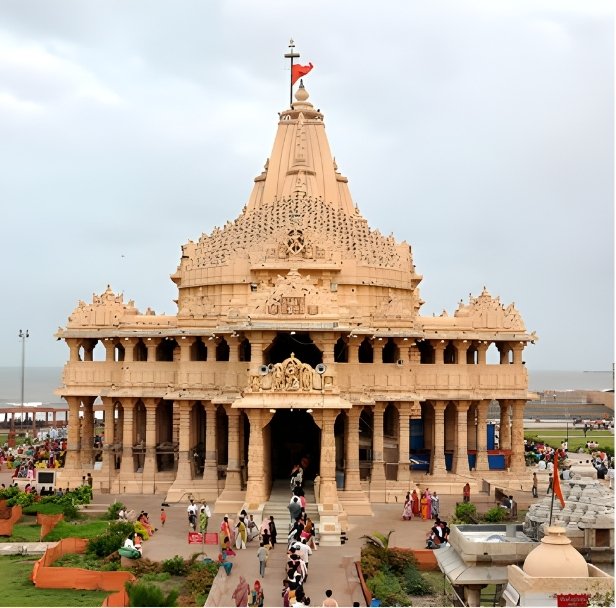
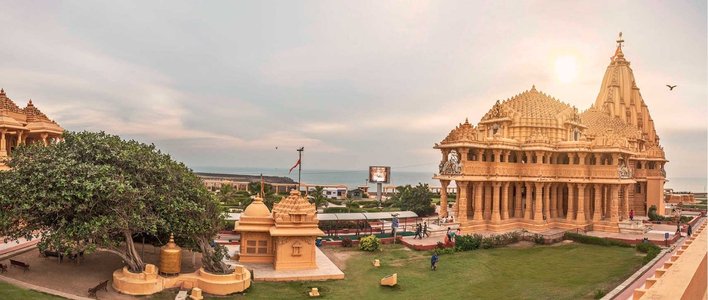
Somnath Temple in Gujarat stands as one of India’s most celebrated and spiritually powerful pilgrimage sites, known for being the first among the twelve revered Jyotirlingas of Lord Shiva. Set along the stunning coastline of the Arabian Sea, the temple offers a majestic blend of devotion, history, and natural beauty. Devotees believe that visiting Somnath washes away lifetimes of negativity and brings clarity, strength, and spiritual grounding. The rhythmic sound of waves meeting the temple’s outer walls, combined with the serene ambiance of its sacred surroundings, creates an atmosphere that inspires deep reflection and inner peace. Somnath is also a symbol of resilience, having been rebuilt multiple times after historical invasions, and continues to stand tall as a testament to unwavering faith. Pilgrims visit throughout the year to perform darshan, participate in daily rituals, and witness its famous evening light show that narrates the temple’s legendary past. Whether you seek divine blessings, architectural beauty, or an experience that connects history with spirituality, the Somnath Temple offers a deeply transformative journey.
History of Somnath Jyotirlinga Gujrat Temple
Somnath Temple has a legacy stretching back thousands of years and is revered as the first Jyotirlinga bestowed by Lord Shiva. The temple has faced repeated destruction during historical invasions but was rebuilt each time by rulers, devotees, and spiritual leaders who refused to let its sanctity fade. Legends connect it to the Moon God, Soma, who is believed to have worshipped Lord Shiva here for liberation from a curse. Its reconstruction in 1951 under the guidance of Sardar Vallabhbhai Patel marked a renewed era of cultural pride and spiritual revival.
Architecture of Somnath Jyotirlinga Gujrat Temple
The architecture of the 12 Jyotirlinga Ujjain temples reflects a blend of traditional Shaiva craftsmanship and symbolic artistic elements. Each shrine houses a distinct Jyotirlinga structure, carefully designed to represent the original temples across India. Stone carvings, sacred motifs, and compact sanctums preserve the authenticity of ancient architectural styles. Pathways allow devotees to move smoothly from one shrine to another, maintaining a serene devotional rhythm. The layout emphasizes simplicity, spiritual immersion, and divine symbolism, ensuring that every Jyotirlinga retains its unique identity while collectively forming a powerful spiritual circuit.
Spiritual Significance
A sacred pilgrimage honoring Shiva’s twelve radiant forms, offering deep purification, protection, and spiritual awakening for devotees seeking divine blessings and inner transformation.
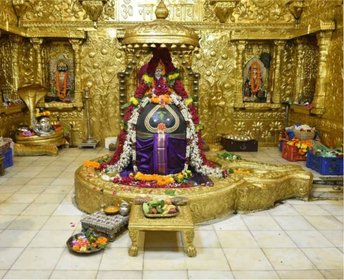
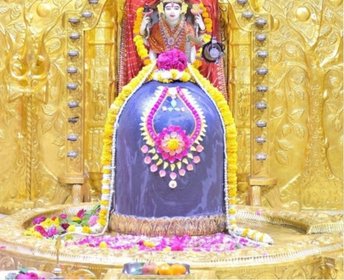
Recognized as the first and holiest among Shiva’s twelve Jyotirlingas.
Believed to cleanse past karmas and grant spiritual liberation.
Associated with the Moon God’s penance and healing.
Revered for its powerful coastal energy and sacred vibrations.
Daily rituals strengthen devotion and inner clarity.
Pilgrimage enhances courage, purity, and divine connection.
Specially visited during festivals.
Mahashivratri, Shravan month, Kartik Purnima, Somvar (Mondays), and major Hindu festivals.